
Last updated November 23, 2026
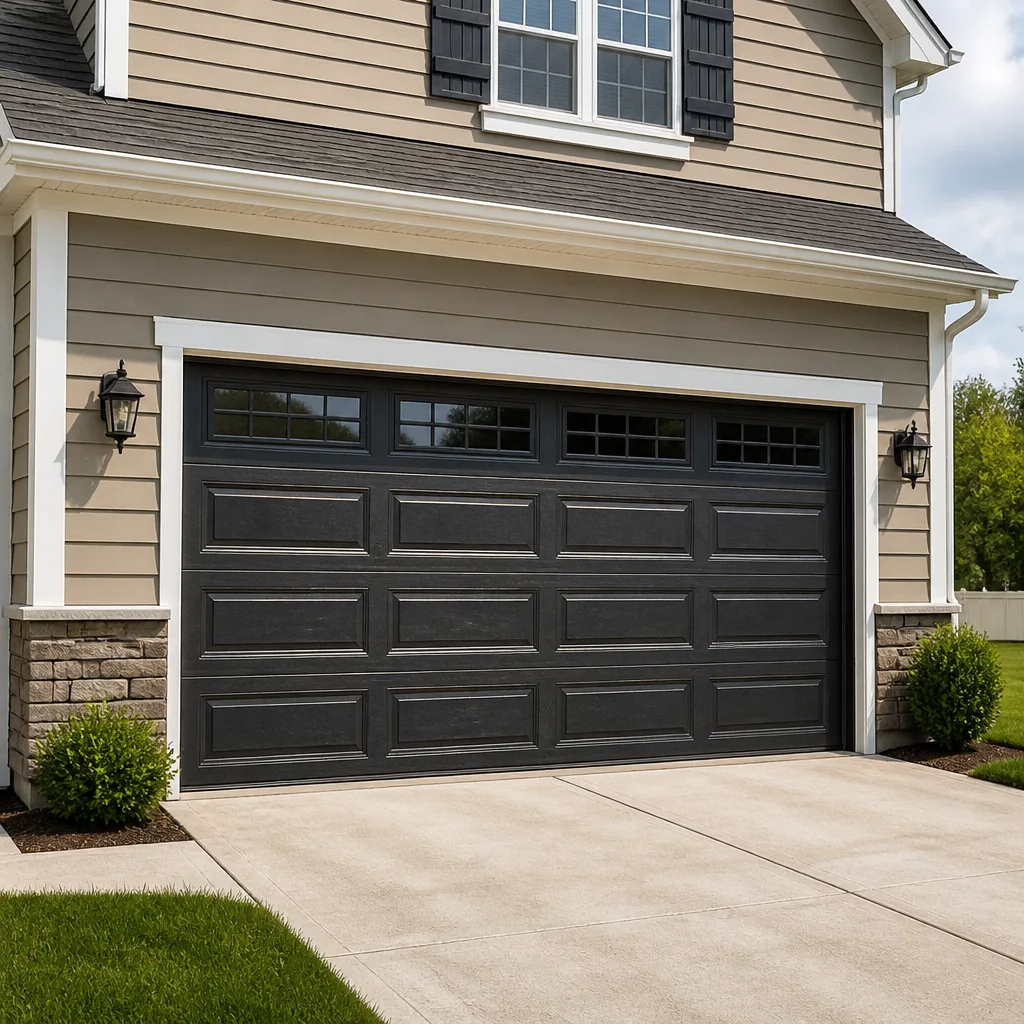 Raised-panel steel
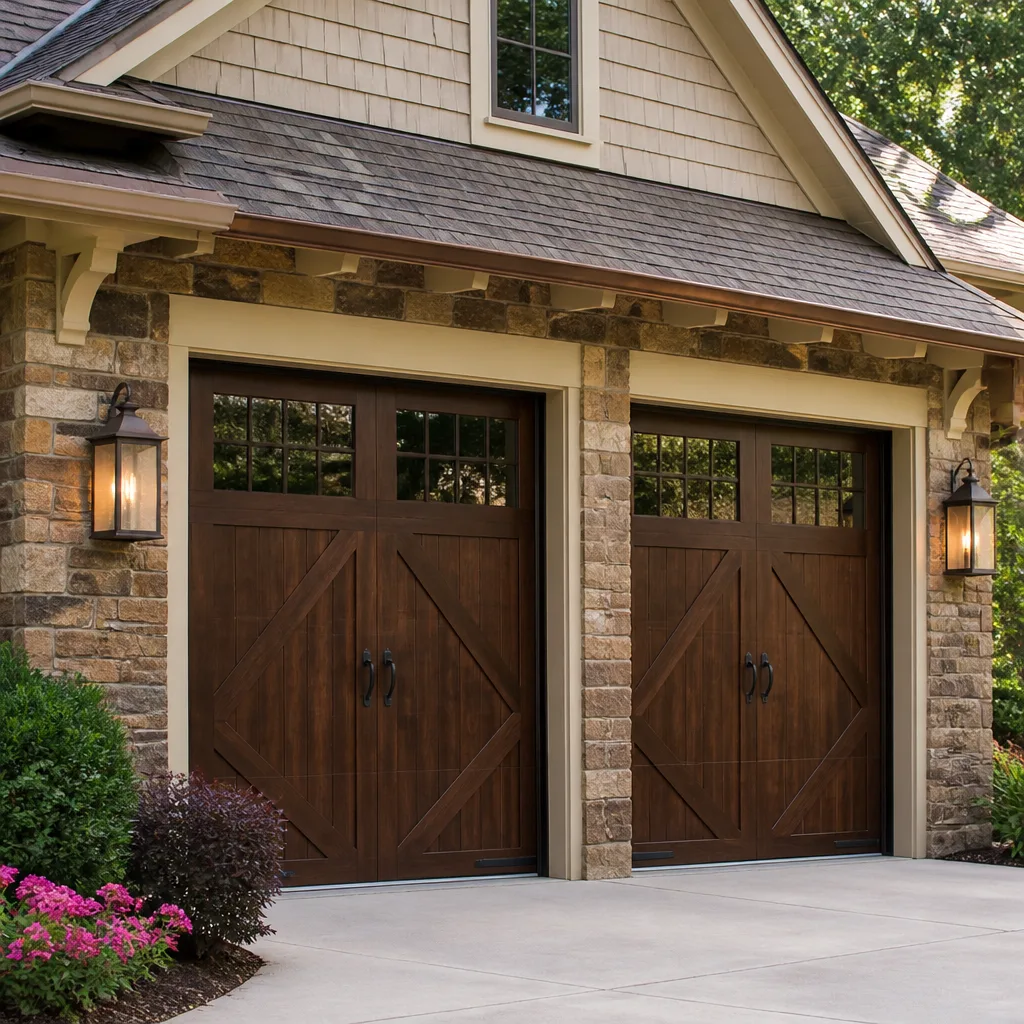 Carriage house
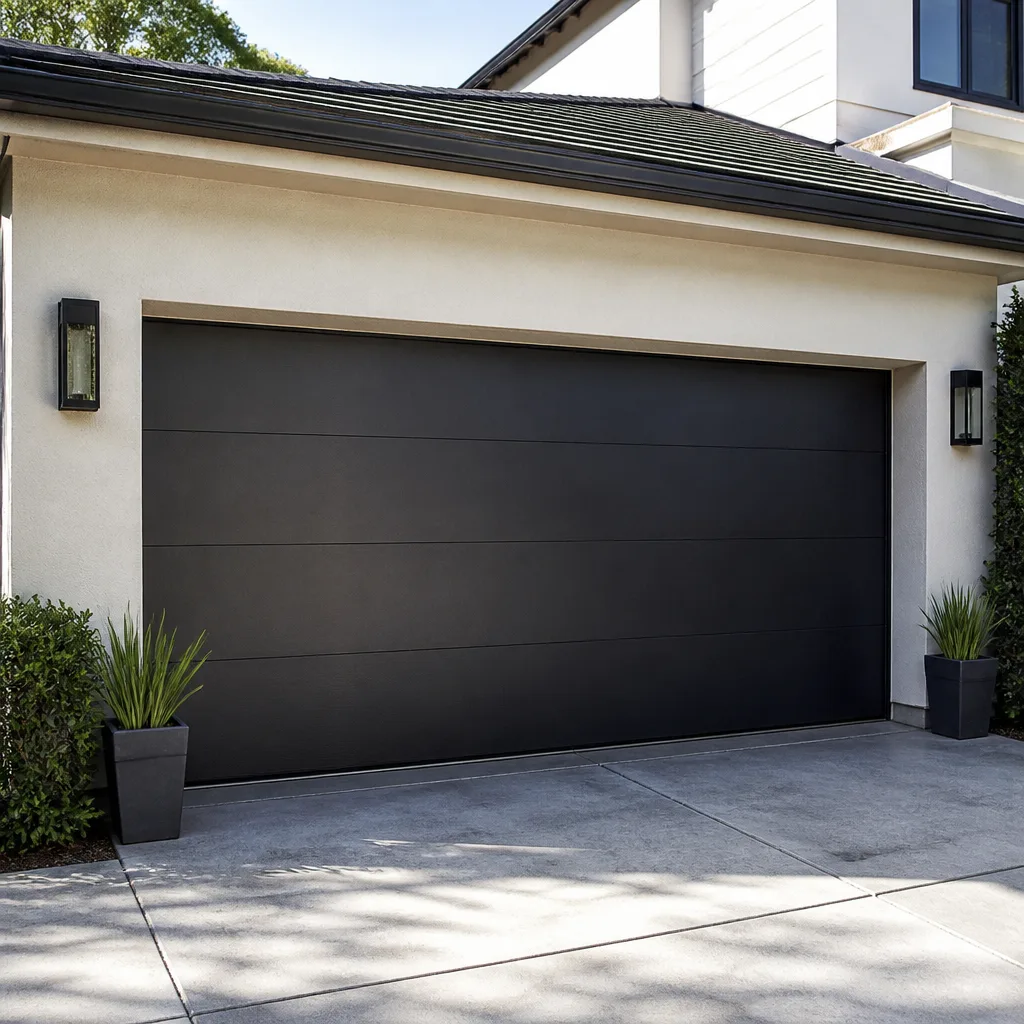 Modern flush
 Full-view glass
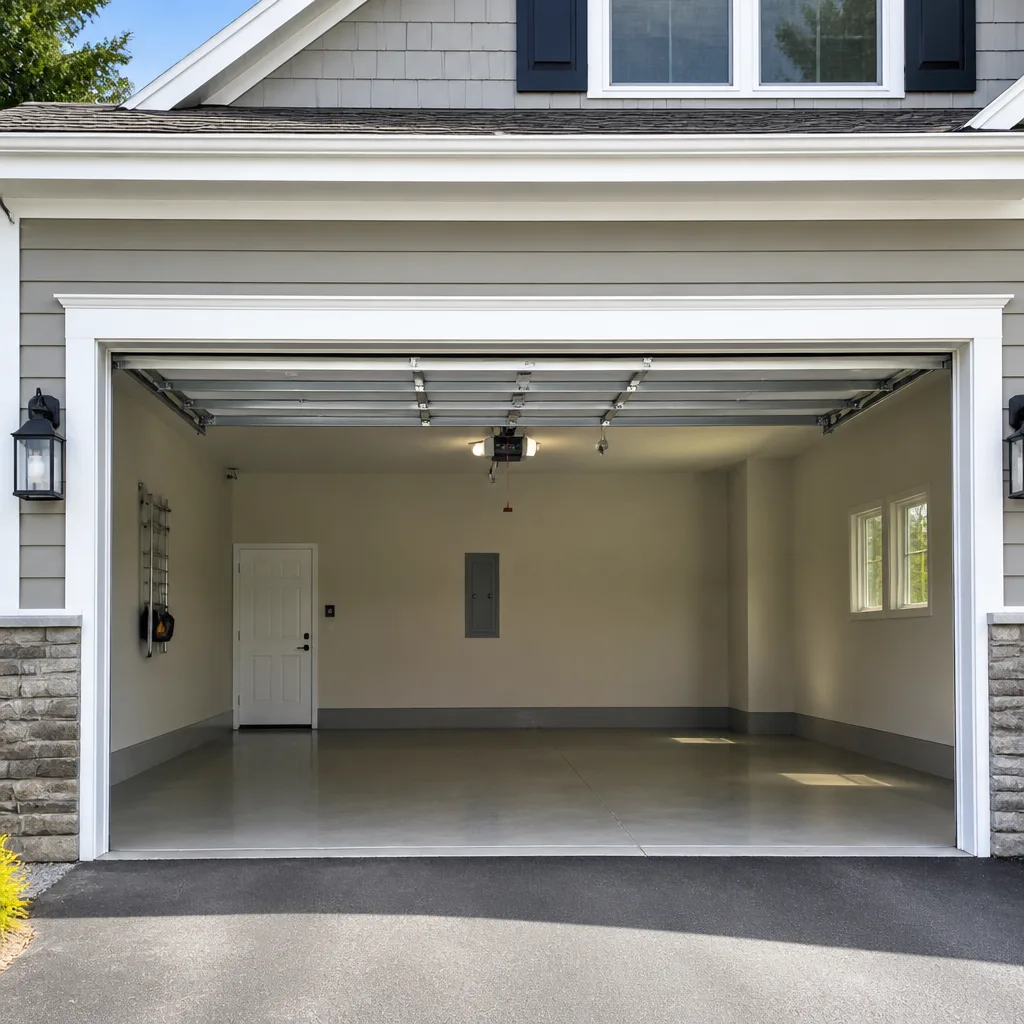 LiftMaster openers
 Chamberlain openers
Full 25-point door and opener safety check with every visit - springs, cables, rollers, tracks, and your LiftMaster or Chamberlain opener included
You get a price before we start. It does not change when the pro arrives.
Get your free estimateDIY vs Professional Garage Door: The Aurora Homeowner’s Decision Guide
Most homeowners assume the DIY-versus-professional question comes down to skill. It doesn’t. A garage door is one of the few systems in your house where the dangerous part isn’t only the work itself, it’s the stored energy waiting inside the hardware long after you’ve put your tools away. A torsion spring under tension doesn’t care whether you’re installing it or just walking past it. That changes the risk math completely, and it’s why some garage door jobs reward a careful homeowner and others should never leave the hands of a trained technician.
This guide walks Aurora homeowners through that distinction task by task. You’ll learn what you can safely handle, what requires professional tools and training, how Illinois handles homeowner permits, and how a botched DIY spring job can affect an insurance claim down the road.
Quick Answer
In Aurora, Illinois, you can safely DIY garage door maintenance like lubrication, sensor cleaning, weatherstripping, and remote programming. Anything involving springs, cables, torsion hardware, or track alignment under load should go to a licensed professional. The line isn’t skill level, it’s stored energy and liability: spring and cable work can injure you at the moment of failure, not just while you’re working, so it belongs with a trained technician.
Styles & brands we work with
- Raised-panel steel
- Carriage house
- Modern flush
- Full-view glass
- LiftMaster openers
- Chamberlain openers
Table of Contents
- Why garage doors are different from other DIY repairs
- The task-by-task breakdown: what you can DIY and what you can’t
- What Illinois law allows Aurora homeowners to do themselves
- Springs and cables: the one part that always needs a professional
- How DIY spring failures affect your homeowner’s insurance
- The hidden cost of a DIY failure
- A three-question decision tree for any garage door issue
- Aurora-specific context: climate, housing stock, and what we actually see
Why Garage Doors Are Different From Other DIY Repairs
Think about the last repair you tackled around the house. A leaky faucet, a sticking door, a slow drain. The danger, if there was any, was contained to the minutes you spent doing the work. Garage doors don’t work that way. A torsion spring stores enough mechanical energy to lift hundreds of pounds of door, and that energy sits there whether you’re installing the spring, adjusting a cable, or doing something as routine as replacing a roller. If something lets go while you’re near it, the injury happens in a fraction of a second with no warning.
That’s the core misunderstanding most Aurora homeowners bring to this decision. The question isn’t “am I handy enough to swap this part,” it’s “is this part still holding stored force that could hurt me or damage my house when it releases.”
There’s a second layer too. Garage door systems are mechanically linked. Springs, cables, tracks, rollers, hinges, and the opener all work as a unit. Loosen one piece while the rest of the system is under tension and you can bend a track, crack a panel, or throw the door off its alignment. A $40 roller replacement that goes wrong can cost several hundred dollars to correct, which is one of the hidden costs we’ll get to shortly.
And there’s a legal layer that doesn’t apply to a faucet. Illinois treats certain home repairs differently from others when it comes to permits and inspections. We’ll cover exactly where the line falls in a moment.
The Task-by-Task Breakdown: What You Can DIY and What You Can’t
The clearest way to answer the DIY question is to sort every common garage door task into one of three buckets: safe to DIY, safe to DIY the diagnosis then hire the fix, or hire immediately. Here’s how that shakes out.
Safe to DIY in Aurora
- Lubrication. A few drops of garage-door-specific lubricant on the rollers, hinges, and hinges-to-track contact points every few months extends hardware life and quiets a noisy door.
- Sensor cleaning and alignment. If the door won’t close, wipe the photo-eye lenses clean and check that they’re pointed at each other. A misaligned sensor is one of the most common reasons a door reverses mid-travel.
- Minor weatherstripping. Replacing the rubber seal along the bottom of the door is a straightforward weekend project, especially in Aurora’s cold winters when a worn seal lets in drafts and snowmelt.
- Remote programming. Pairing a new remote to a LiftMaster, Chamberlain, or Genie opener is a matter of following the manual, usually a button press on the motor head and a button press on the remote.
- Visual inspection. Walking around the door and looking for worn rollers, frayed cables, or bent track is free and worth doing once a season.
DIY the Diagnosis, Hire the Fix
- Opener issues. You can check the breaker, test the wall button, and reset the opener’s travel limits. If the unit still won’t respond, that’s where garage door opener repair takes over.
- Door won’t open or close smoothly. You can identify whether the problem is the opener or the door itself by disconnecting the emergency release and testing the door by hand. If it’s heavy or binds, the issue is mechanical and needs a technician.
- Off-track door. You can look and describe what’s happening, but don’t try to force it back. A door that’s off its track under tension is a call-us situation.
Hire Immediately, No Diagnosis Needed
- Broken spring. If you heard a loud bang from the garage and the door won’t lift, the spring is broken. This is the highest-risk job on the list and belongs with a trained professional.
- Frayed or snapped cable. Cables are under the same tension as springs and can whip free.
- Door is bent or bowed. Panel replacement on a loaded door system is never a DIY job.
- Torsion bar adjustments. Never touch the winding bars or the torsion bar itself.
If you’re not sure which bucket your problem falls into, plain garage door repair is the safest entry point, and a technician can usually sort out the cause in a single visit.
What Illinois Law Allows Aurora Homeowners to Do Themselves
Illinois generally allows homeowners to perform most maintenance and repair work on their own property without a state contractor license. That’s the short version most Aurora homeowners have heard, and it’s accurate as far as it goes. What trips people up is the intersection of two separate rules: the licensing rule and the permitting rule.
The homeowner exemption, explained
The Illinois contractor licensing system applies to people who do work for hire. If you’re working on your own home, you’re generally outside that system, which means you can legally replace a light fixture, paint, or lubricate your garage door hardware without pulling a state license. That said, the exemption isn’t unlimited. If your local municipality requires a permit for a specific type of work, the permit still has to be pulled, and some inspections need a licensed trade to sign off.
What this means for garage door work in Aurora
Garage door replacements in most Illinois municipalities, Aurora included, typically require a building permit because a full replacement touches structural attachment points, framing, and possible electrical work for the opener. Routine repairs like a spring replacement or a roller swap usually don’t require a permit. That’s part of why spring work in particular is a strange middle ground: it’s often permit-exempt but still one of the most dangerous jobs in the house.
A good rule of thumb for Aurora homeowners: if the job involves adding or removing hardware from the door itself, check with the city’s building department before you start. They can tell you in a two-minute phone call whether your specific project needs a permit and what the inspection requirements are. If the answer is yes, that usually points to bringing in a licensed professional. The local pro we connect you with is licensed and insured as their state requires, so the permit path is straightforward.
Why this matters even for DIY-friendly jobs
Doing DIY work that technically requires a permit doesn’t just create code risk, it can create resale risk. If you ever sell the Aurora home and an inspector finds unpermitted structural work, you may have to pay to redo it before the sale closes. On garage door openers specifically, most replacements don’t need a permit, so the electrical side is typically fine to do yourself as long as you follow the manufacturer’s instructions.
Springs and Cables: The One Part That Always Needs a Professional
Every task in this guide can be talked through in terms of tradeoffs. Spring and cable work can’t. It’s the single line where DIY stops making sense, and it’s worth explaining exactly why.
A garage door spring, whether torsion (mounted horizontally above the door) or extension (mounted along the tracks), stores the mechanical energy that counterbalances the weight of the door. When the door is down, the spring is at rest. When the door is up, the spring is fully wound. During adjustment or replacement, a technician winds the spring by hand with steel bars to set that tension, then locks it in place with set screws on a collar. If any of that goes wrong, the spring or bar can release with lethal force in less than a second.
The part people don’t think about is that the danger isn’t confined to the install. A miswound spring is a spring that can fail later, while you’re pulling out of the driveway with your kids in the car, or while someone is walking under the door. A spring that fails cleanly usually just snaps and stops the door. A spring that fails because of improper winding or a loose set screw can throw hardware across the garage.
Our technicians have up to 13 years of experience with garage door spring repair, and they’re trained across eight major brands including LiftMaster, Chamberlain, Genie, Clopay, Amarr, Wayne Dalton, Craftsman, and Raynor. Spring work is the job where that training pays off the most, because every manufacturer uses slightly different hardware and every spring has a specific cycle life. Getting the right spring and winding it correctly means the door will counterbalance safely for years instead of months.
If you’re in Aurora and you hear the bang of a spring breaking, don’t try to lift the door by hand to see what’s happening. A door with a broken spring is dead weight, often hundreds of pounds, and the opener or the door itself can fail unpredictably while you’re under it. Call us and let a technician take it from there.
How DIY Spring Failures Affect Your Homeowner’s Insurance
Almost no Aurora homeowner thinks about insurance when they decide to try a garage door repair on their own. It’s worth thinking about, because a claim tied to an improperly performed repair can be denied, and the fallout can extend beyond a single incident.
The claim denial risk
Most homeowner policies cover accidental damage, not damage that results from neglected maintenance or work performed incorrectly. If a DIY spring replacement fails and injures a family member or damages a car in the driveway, the insurance company may examine the repair to determine whether it was done to a professional standard. If they conclude it wasn’t, the claim can be denied. The policy language differs from carrier to carrier, but the underlying logic is universal: insurers protect against accidents, not against amateur installations.
The liability question
If you have guests, a nanny, a landscaper, or anyone else working on your Aurora property and they’re injured by a garage door that failed because of a DIY repair, your liability exposure extends to them. Depending on the situation, your insurer may cover the injury but then pursue recovery against you, or deny the claim entirely. A licensed professional carries their own insurance, which shifts that risk away from your policy.
What professional work does for you
When a licensed technician performs the spring or cable work, the job is documented, and if something fails later, there’s a professional record and their insurance on the line. That’s not an insurance guarantee, but it’s a meaningfully different picture from a DIY repair with no paper trail. For Aurora homeowners who plan to sell their home in the next few years, professional documentation on a spring or opener replacement is also something a future buyer’s inspector likes to see.
The Hidden Cost of a DIY Failure
DIY looks cheap on paper because you’re only counting the part. What most homeowners miss is the second and third cost when something goes wrong, and garage doors are uniquely good at producing those extra costs.
Here’s how a small DIY failure cascades into a bigger bill:
- You replace a worn roller yourself. It’s a $40 part and a 15-minute job, until the door shifts slightly out of alignment on the track while it’s up.
- The track bends. A door that runs off a bent track doesn’t just look misaligned, it can bind on the way down and put stress on the opener motor or the springs.
- The door panel flexes or dents. If the door comes down unevenly, the panel can catch the frame or the bottom seal, and a cosmetic problem becomes a panel replacement.
- The opener motor burns out. A door that binds adds strain to the opener every time it runs, and now you’re looking at opener repair on top of everything else.
- You call a professional anyway. Now the repair includes correcting what you did, not just replacing the original worn part.
The math is straightforward. A roller replacement done right is cheap. A roller replacement that bends a track and strains the opener is a multi-part repair. Same principle applies to weatherstripping: a badly installed bottom seal that doesn’t sit flush lets in drafts and moisture through Aurora’s winter, and the result is a garage that never fully dries out, which is a problem for the framing and the concrete slab, not just the door.
There’s also the sunk-cost trap. The homeowner who’s already spent a Saturday on a project that’s going wrong tends to push through and finish it, which is exactly when a small problem becomes a big one. A professional estimate gives you a clear number before any work starts. There’s no discovery moment in the middle of the job where the cost doubles.
For a full picture on costs, our team can walk you through what a typical repair looks like for your setup and quote it upfront. The price is quoted and agreed before any work starts, so you know exactly what you’re paying before the technician reaches for a tool.
A Three-Question Decision Tree for Any Garage Door Issue
When something goes wrong with your garage door, here are the three questions that route the problem. Answer them in order.
Question 1: Is the problem cosmetic or structural?
- Cosmetic: A faded panel, worn weatherstrip, or a noisy roller. Move to Question 2.
- Structural: A bent panel, a bowed section, a cracked hinge point, or any visible damage to the tracks or cables. Hire a professional. Structural fixes need to account for the door’s weight balance and cannot be reliably corrected by hand.
Question 2: Is stored mechanical energy involved?
- No stored energy: Sensors, remotes, weatherstripping, bottom seals, cosmetic hardware. Safe to DIY.
- Stored energy involved: Springs, cables, torsion bars, anything the door’s weight is hanging on. Hire a professional. A trained technician is the only safe way to handle these, regardless of experience level.
Question 3: Is the opener the only suspect?
- Opener-only issue: The door works by hand when disconnected from the opener, but the opener won’t run or runs inconsistently. This is garage door opener repair territory, and a trained technician can usually diagnose it on a single visit. This is one of the cases where a professional call is often faster than a DIY diagnosis.
- Door-only issue: The opener runs fine but the door binds, binds only on one side, or is visibly off track. Same conclusion: hire a technician. The issue is under the door’s weight and needs to be corrected with the door’s balance in mind.
While you’re working through the questions, you’ll probably notice the “hire a professional” bucket is much bigger than the “safe to DIY” bucket. That’s part of the honest answer to this question. Garage doors are one of the areas where the professional’s job isn’t to be defensive about their trade, it’s to be honest about where the danger lives.
Aurora-Specific Context: Climate, Housing Stock, and What We Actually See
Garage door repair in Aurora isn’t a generic exercise. The local climate and housing stock shift the answer a little bit, and knowing what to expect helps you decide when to call.
Aurora’s winters do a specific kind of wear on garage doors. Freeze-thaw cycles push at the bottom seal and the concrete apron under the door. Road salt from the Fox Valley’s winter streets gets tracked into the garage and onto the metal rollers and hinges, and salt is a slow corrosion driver. Snow and ice build up along the bottom of the door through the season, which strains the springs every time the door is lifted against a frozen seal. That’s one of the reasons spring failures in Aurora tend to cluster in the early spring, right as the ground thaws and the door finally moves freely.
The neighborhoods matter too. In older parts of Aurora like the near-east side and downtown, we see 1940s and 1950s single-car garages with lighter doors and older tracks. On the west side and in the newer developments stretching toward North Aurora and Montgomery, we see larger doors and more opener-based systems from the brands Aurora homeowners know: LiftMaster, Chamberlain, Genie, Clopay, and Amarr. Summer humidity can also cause sticking on wooden garage door frames on those older homes, which is a job for the weatherstripping checklist rather than the technician.
What we see across all of it is that the door most likely to fail is the one that’s never been lubricated and never had a visual inspection. If you’re not sure of the last time your door hardware was looked at, a simple walk-around once a season catches most of the wear before it becomes a broken spring or a snapped cable. If you’d rather have a trained eye do the once-over, our team covers all five service categories, from routine inspection through emergency response, and we’re happy to take a look.
Common Mistakes to Avoid
- Misreading the “long weekend project” instinct. Garage door work shouldn’t be squeezed into a Saturday afternoon. The window is short and the stakes are high if you’re working near springs or cables.
- Forcing a door back onto its track. If the door is off the track, don’t try to guide it back by hand. That door is holding hundreds of pounds of stored energy, and it can shift sharply away from you.
- Winding a torsion spring without the correct winding bars. Screwdrivers and pry bars have been known to bend or slip under winding tension. This is a job for a technician with proper winding bars and a trained grip.
- Replacing one spring of a matched pair. When a torsion system uses two springs, both usually carry the same wear. Replacing one and leaving the other means the remaining spring fails soon after. A matched pair is the standard repair.
- Lubricating the tracks. Track lubricant attracts grit and creates buildup that actually causes binding. Lubricate the hinges, rollers, and the torsion bar, not the track surface.
- Ignoring a scraping sound during Aurora thaw season. A door that scrapes on the way up in early spring usually has a bottom seal packed with ice or a swollen wooden frame. Addressing it early prevents spring strain.
- Pulling the red emergency cord and forgetting it. Once you pull the release cord to disconnect the door from the opener, the opener won’t lift the door until you re-engage the trolley. Test the door by hand first, then re-engage.
- Not checking the opener’s brand before buying a replacement remote. A remote that’s designed for a LiftMaster won’t talk to a Chamberlain or Genie unit. Check the manual first.
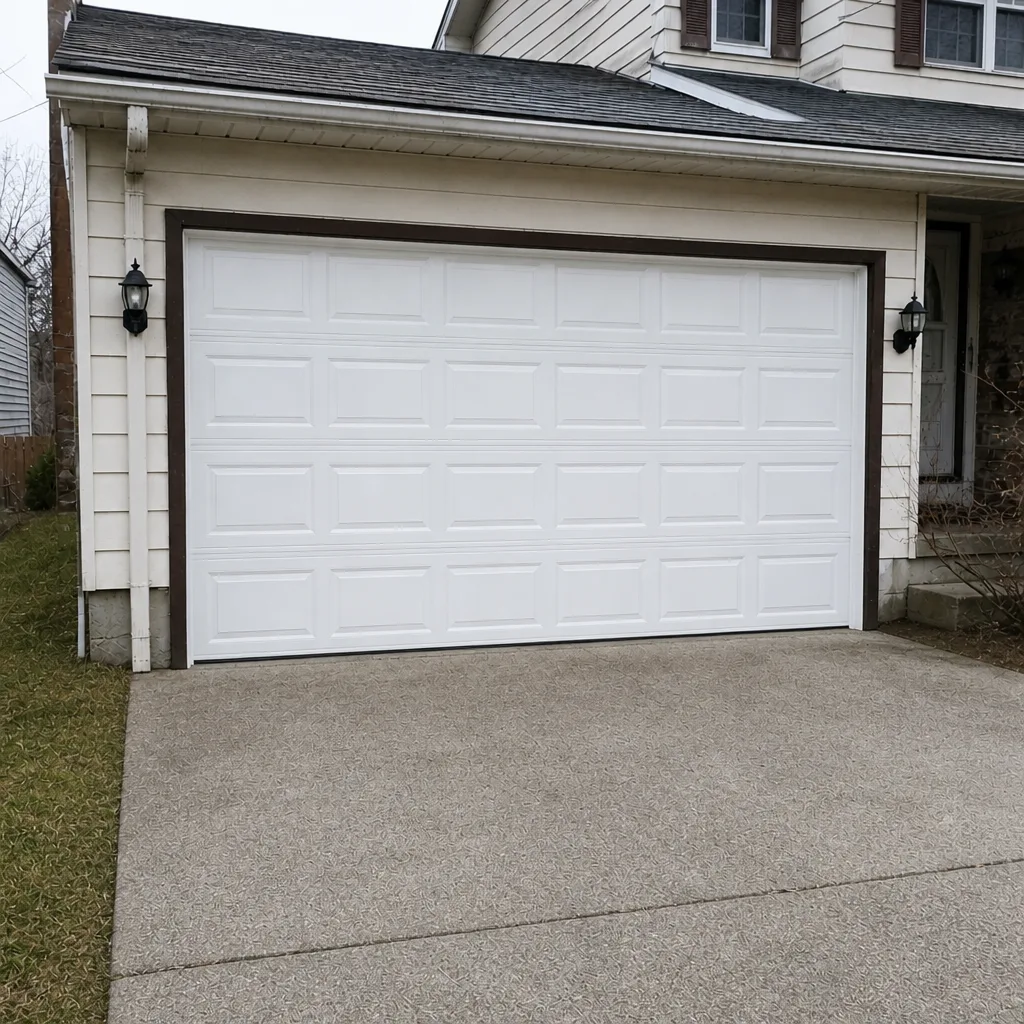
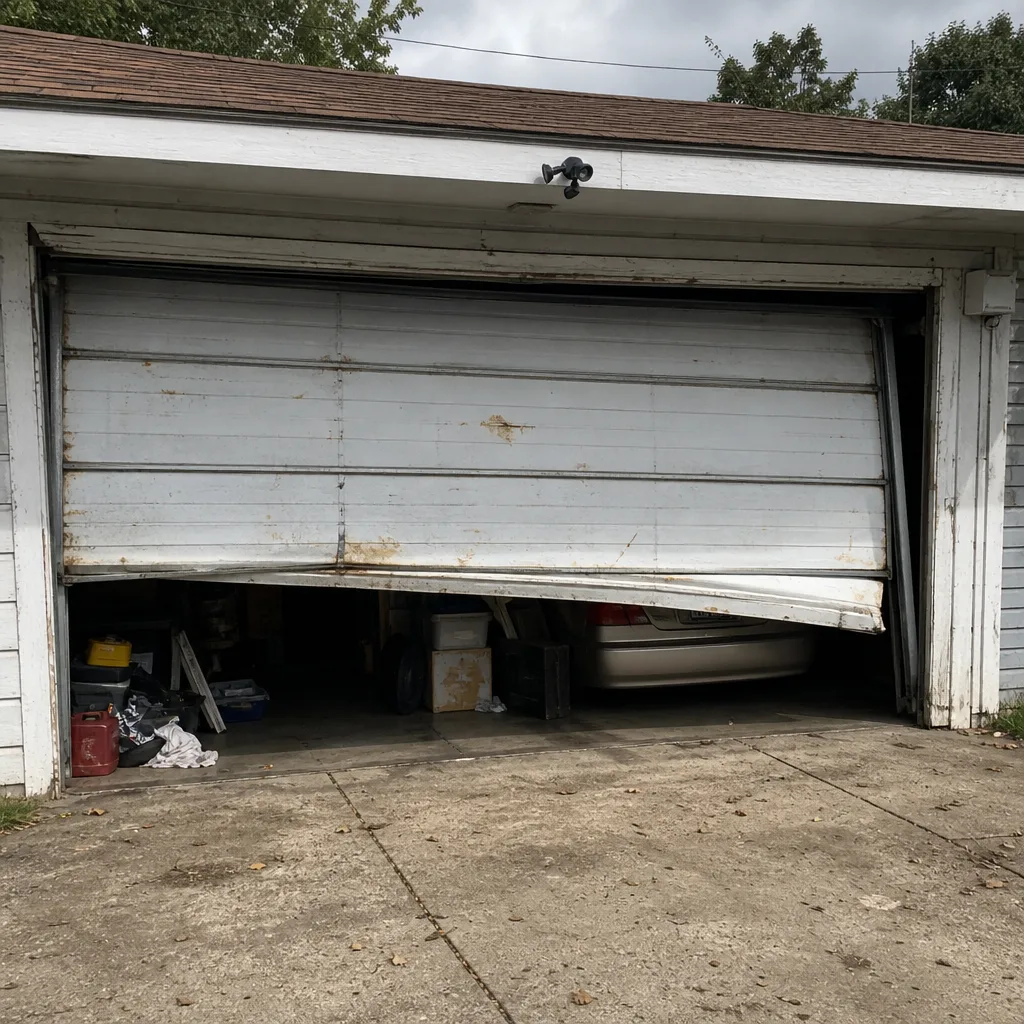
See the difference
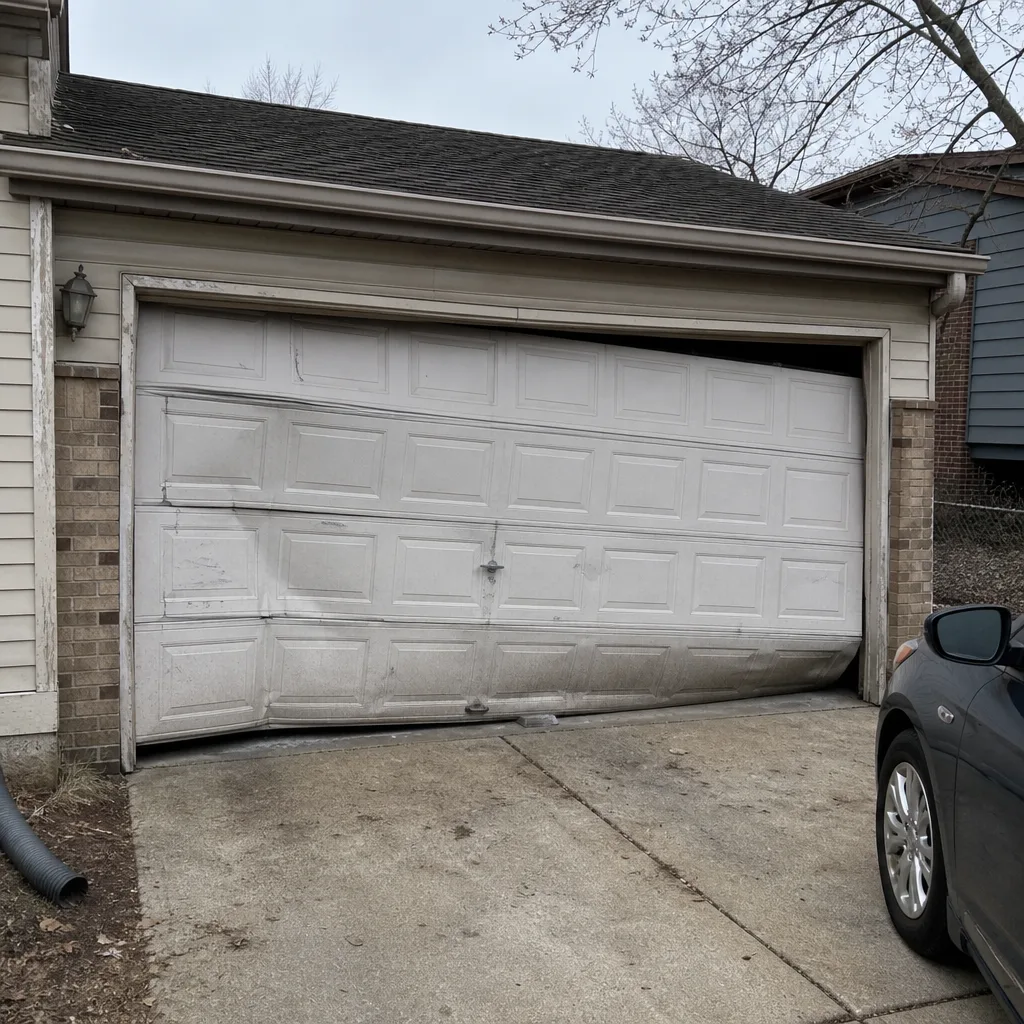 Before
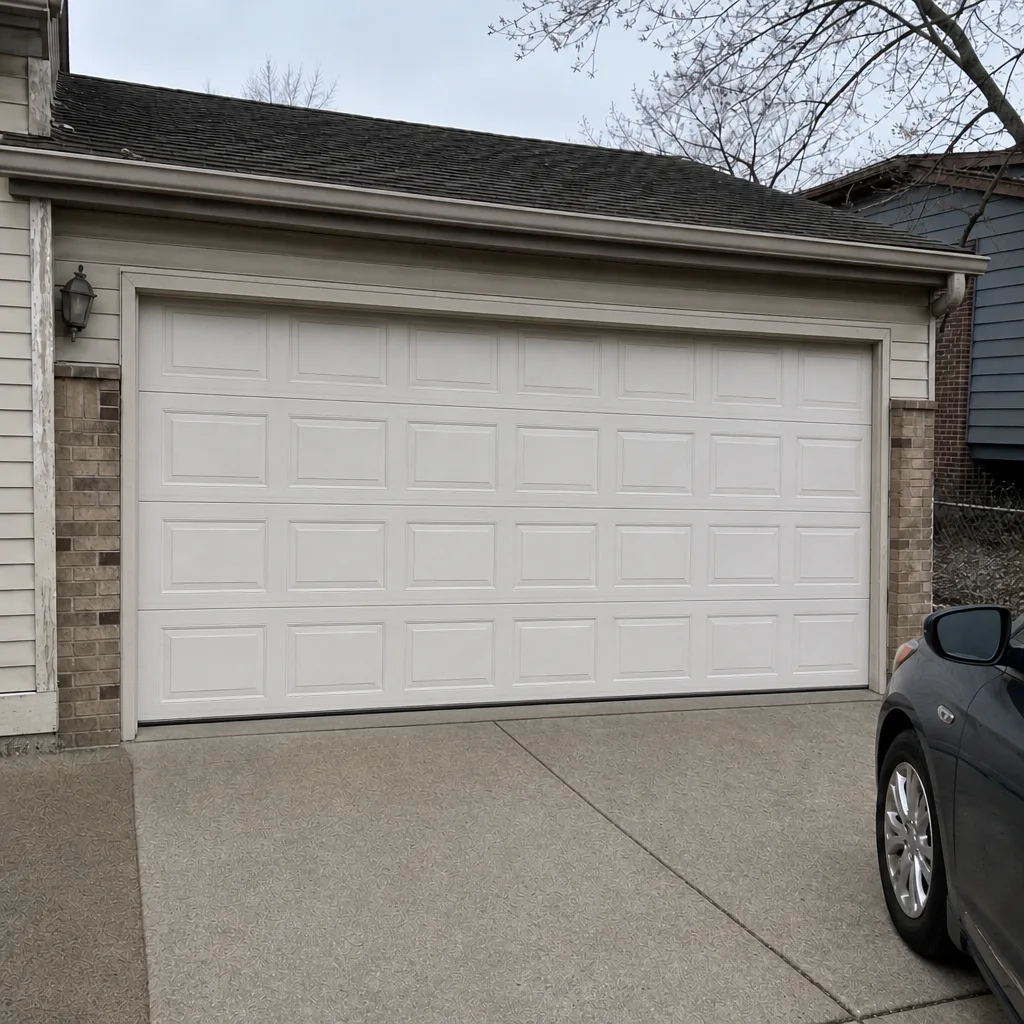 After
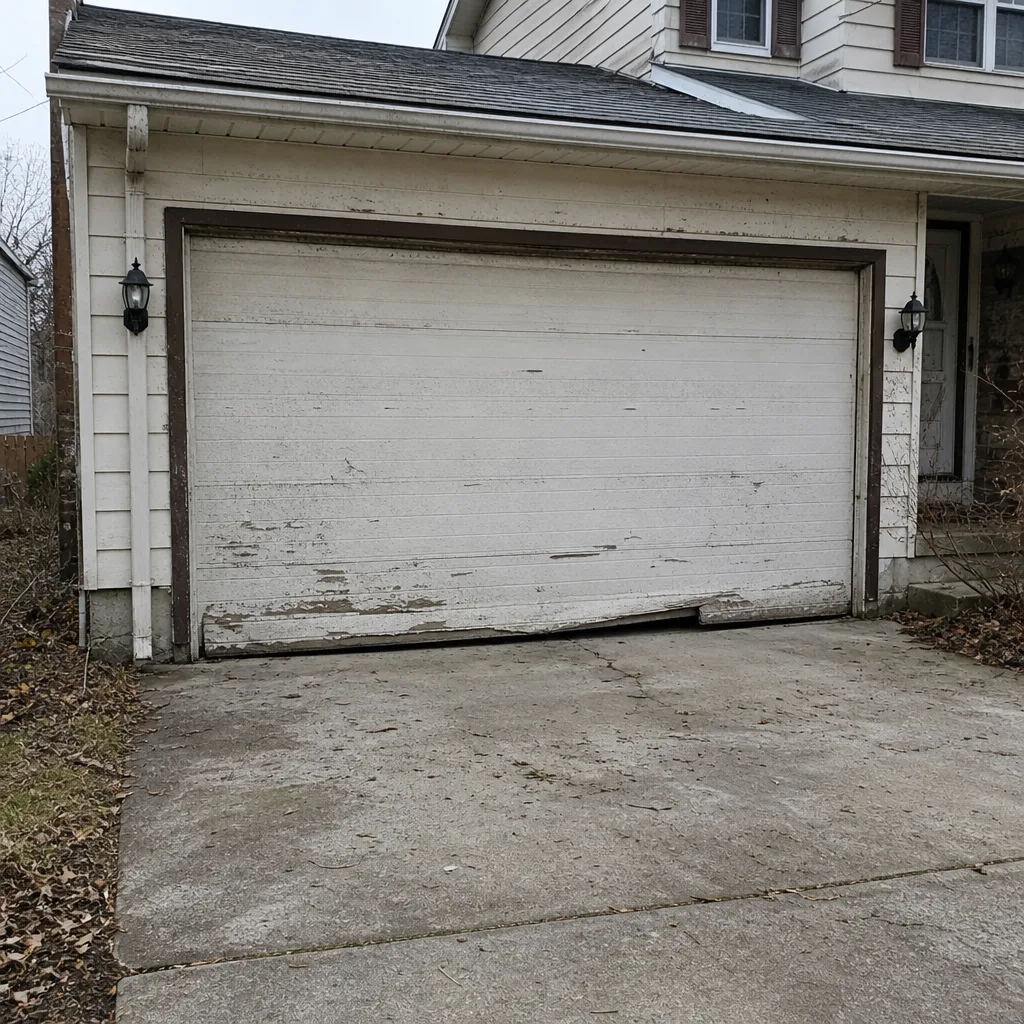 Before
 After
 Before
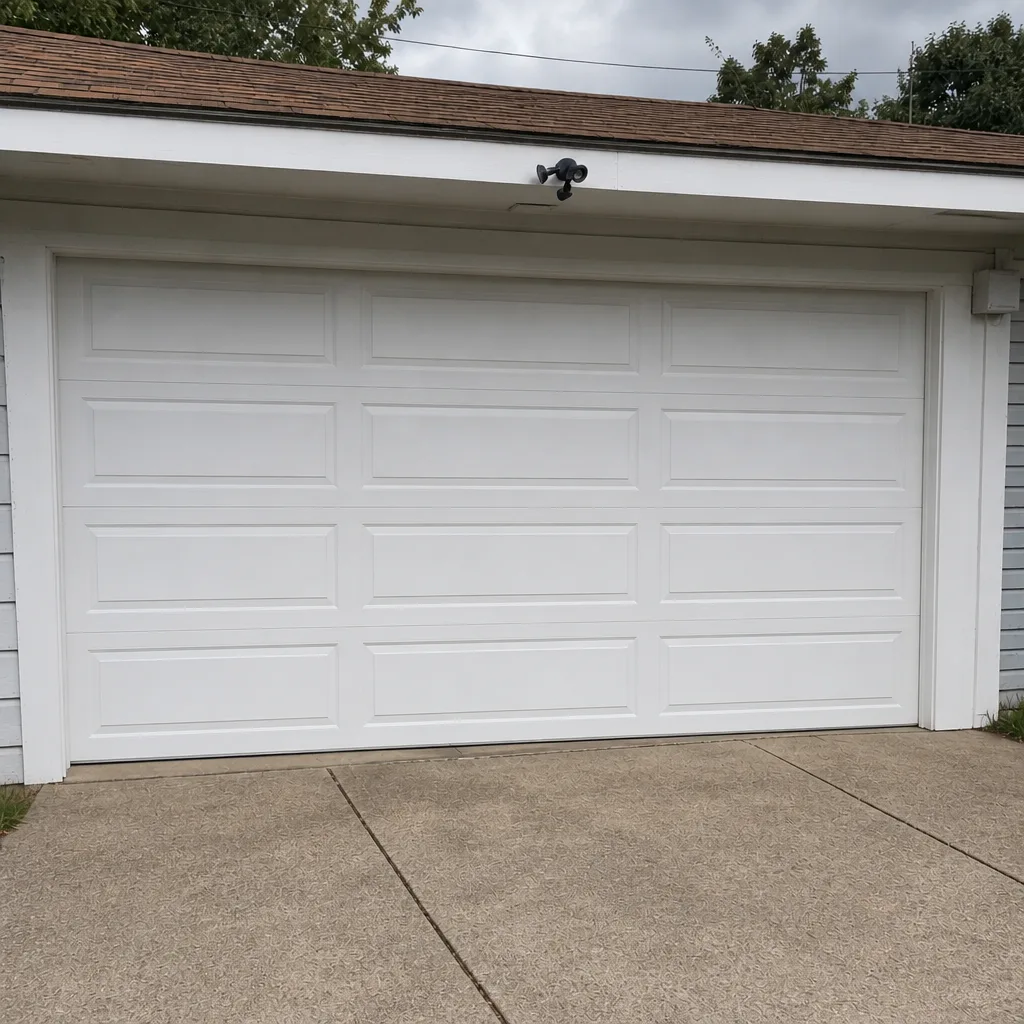 After
When to Call a Professional
Some jobs are obvious calls, and some limp along for months before a homeowner gives up and finally dials. Here are the situations that should go to a technician right away, in Aurora:
- You heard a bang from the garage and the door won’t lift. That’s a broken spring.
- The door is off its track, bent, or hanging at an angle.
- A cable has snapped, frayed, or is hanging loose.
- The opener runs, but the door does not move.
- The door reverses on its own before it hits the floor, and sensor cleaning hasn’t fixed it.
- The door shakes or shudders during travel even after lubrication.
- You need a full door replacement and want a written measure and price first.
Aurora Garage Door Repair Co offers free estimates in Aurora. Call (877) 492-4066. We answer 24/7, with fast dispatch from 7am to 7pm, Sunday through Friday. The estimate is free and the price is set per job by the written estimate, so you know what you’re paying before anyone touches a tool.
Frequently Asked Questions
No, replacing a garage door torsion or extension spring is not a safe DIY job. The spring stores enough mechanical energy to cause serious injury even outside the work session, during a failure later. It should always go to a trained technician. If you’re in Aurora and a spring has snapped, call (877) 492-4066. We answer 24/7, with fast dispatch from 7am to 7pm, Sunday through Friday.
Most Aurora garage door replacements touch structural attachment points, so they typically require a building permit. The safest answer is to call the city’s building department before you start. Routine repairs like a spring swap or roller replacement usually don’t need a permit, but the spring work itself should still be done by a licensed technician for safety reasons.
Spring repair in Aurora is quoted per job and depends on whether it’s a single spring or a matched pair, the spring’s size and cycle rating, and the door’s configuration. A matched pair is typically replaced together because both springs wear at the same rate. Call (877) 492-4066 for an exact quote. The estimate is free, and the price is set by the written estimate before any work starts.
Often not. Most homeowner policies cover accidental damage but exclude damage caused by improperly performed work or neglected maintenance. If a DIY spring repair fails and injures someone or damages a vehicle, the insurer may deny the claim after reviewing the repair. Having a licensed professional perform the work shifts that risk and provides documentation. Call (877) 492-4066 for a free estimate before you attempt a risky repair.
Yes, replacing a garage door opener is generally within reach for a careful homeowner, and most opener replacements don’t require a permit. It’s the torsion and cable work on the door that should stay with a technician. If you’re unsure whether the issue is the opener or the door, call (877) 492-4066 and we can help you sort out which repair you’re looking at.
Same-day service is available for repair calls when the schedule allows. Call (877) 492-4066. We answer 24/7, with fast dispatch from 7am to 7pm, Sunday through Friday. A call outside dispatch hours is booked into the next opening. New door installations are measured and scheduled rather than same-day.
The Bottom Line
The DIY-versus-professional question for garage doors isn’t about how handy you are, it’s about stored energy. Lubrication, sensor cleaning, weatherstripping, and remote programming are safe for any Aurora homeowner. Springs, cables, torsion bars, and structural track or panel repairs belong with a trained technician. The Illinois homeowner exemption lets you legally do a lot of work on your own property, but it doesn’t protect you from injury or from an insurance claim that could be denied after a failed DIY repair.
When the answer is “call someone,” you don’t have to figure out which specialist to call. Aurora Garage Door Repair Co handles repair, opener repair, spring repair, installation, and emergency service in Aurora with technicians trained on eight major brands. If you want a starting point, call (877) 492-4066 for a free estimate. We answer 24/7, with fast dispatch from 7am to 7pm, Sunday through Friday. We’re closed on Saturday.
Written by the team at Aurora Garage Door Repair Co.